We of the spy clan are fans - ardent fans - of Julian Smith. Doubtless many of you have already discovered this guy on Youtube; he has a large and (in our opinion) vastly entertaining collection of short videos, many of which we know by heart and quote often. And (double brownie points for Julian) he's homeschooled!
With the arrival of summer, the retreat of schoolwork, and the sudden abundance of free time for reading, this one is most particularly fitting. I'm sure many of you can relate to it. It is entitled "I'm Reading a Book."
Enjoy.
If you need a laugh and you have the time (be careful; his videos sucked me in for literally hours) check out some of his other videos. I would in particular recommend "Hot Kool Aid", "Pre-Blessed Food", and "UMove" (it's all I can do to stop myself from piling on more recommendations. I'm getting off now. Quickly. Truly. Now.)
Fan,
-whisper

May 16, 2011
Summer Flames
She said we could! She said we could!
Mom said yes, so we rush to the fire pit.
Get some sticks! Get the paper! Find a match! Start the blaze!
We dash through feathery young-summer air.
Crumpled newsprint bleeds onto our hands
Three tiny matches gown the wads with fire
We cage them in with bark-crusted branches.
A fuzz of smoke curls from our umpteenth fire.
Get the books! Get the books!
We run inside and run back out,
Holding tight the math textbooks.
Squashed between their pages are:
twenty cups' worth of spilled tea,
a slabs' worth of smeared graphite,
and untold gallons of despairing tears.
We gather, panting, round the fire.
Holding Math 5, Algebra 1/2, Geometry, PreCalculus.
Staring at the flames that we have made.
We look at the books, we look at each other.
We picture the million problems inside our Books.
We've cried over, sulked upon, sobbed about, raced through, double-checked and re-corrected
each one.
We want to be rid of them.
Then we think of the ink on those pages
Fattening the hot feather smoke.
We picture each page curling black.
And every lesson crumpling dark.
And every problem eaten and lost forever.
Forever.
Forever is a long time.
We look at the books, we look at the flames.
And we are sad.
And we don't know why.
We kick out the fire. We cool ash with water. The smoke is eaten by summer.
Carrying our books with benevolence,
We take them inside and put them away.
Because we are not book burners,
not even for PreCalculus.
And because summer feels too good for burning.
May 3, 2011
Mark Twain's Rules of Writing

The following are the 18 rules of writing that Mark Twain scathingly accused Fenimore Cooper's novel The Deerslayer of violating. According to Twain, fiction requires:
1. That a tale shall accomplish something and arrive somewhere.
2. That the episodes of a tale shall be necessary parts of the tale and shall help to develop it.
3. That the personages in a tale shall be alive, except in the case of corpses, and that always the reader shall be able to tell the corpses from the others.
4. That the personages in a tale, both dead and alive, shall exhibit a sufficient excuse for being there.
5. That when the personages of a tale deal in conversation, the talk shall sound like human talk, and be talk such as human beings would be likely to talk in the given circumstances, and have a discoverable meaning, also a discoverable purpose and a show of relevancy, and remain in the neighborhood of the subject at hand, and be interesting to the reader, and help out the tale, and stop when the people cannot think of anything more to say.
6. That when the author describes the character of a personage in his tale, the conduct and conversation of that personage shall justify the said description.
7. That when a person talks like an illustrated, gilt-edged, tree-calf, hand-tooled, seven-dollar Friendship’s Offering in the beginning of a paragraph he shall not talk like a Negro minstrel at the end of it.
8. That crass stupidities shall not be played upon the reader as “the craft of the woodsman, the delicate art of the forest,” by either the author or the people in the tale.
9. That the personages in the tale shall confine themselves to possibilities and let miracles alone; or, if they venture a miracle, the author must so plausibly set it forth as to make it look possible and reasonable.
10. That the author shall make the reader feel a deep interest in the personages of his tale and in their fate, and that he shall make the reader love the good people in the tale and hate the bad ones.
11. That the characters in the tale shall be so clearly defined that the reader can tell beforehand what each will do in a given emergency.
12. The author shall say what he is proposing to say, not merely come near to it.
13. Use the right word, not its second cousin.
14. Eschew surplusage.
15. Not omit necessary details.
16. Avoid slovenliness of form.
17. Use good grammar.
18. Employ a simple and straightforward style.
- - -
Such sound wisdom from the esteemed Twain. 3 is hilarious. 14 is beautiful. 11 is golden.
Do you agree with his rules? (I do.)
Does your novel violate any of these principles? (mine does.)
Have you read The Deerslayer? (I haven't.)
Is "surplusage" even a word? (dictionary.com says it is.)
Do you like carrot cake? (I do.)
Simply,
-whisper
April 26, 2011
Lord of the Rings in 60 Seconds
Some of you might recall a previous LOTR spoof video I once showed; here is another excellent one that was brought to my attention by Chayal.
It's the story of LOTR compressed into 60 seconds. :| Enjoy.
Chortling,
-whisper
It's the story of LOTR compressed into 60 seconds. :| Enjoy.
Chortling,
-whisper
April 22, 2011
Audiobooks
I have discovered something wonderful.
Audiobooks.
I learned a few weeks ago that I can simultaneously listen to a story whilst doing my job (shelving books) at the library. Earning money and reading at the same time! Can life get better!?! *dazed expression* The trouble with this voracious feat of multitasking is that it tends to turn my mind to mush after a while. >_> Four solid hours of carrying books and alphabetizing books and sorting books and shelving books and picking up books and thinking about books while listening to a story the entire while can mess with one's mind a bit. But I will triumph! I am a fiercely stubborn multitasker, and I will not desist until my mind is slipping like melted butter from my ears! (I'm sure you're grateful for that lovely visual.)
I have already consumed five books on the job thus far, and they are as follows:
Walk Two Moons
Sharon Creech
I liked this one. It was unusual and a sort of modern-classic. Surprising, funny, sad, and entertaining. It's the story of a girl (with an epic name, "Salamonca Tree Hittle", or "Sal" for short) whose mother has left her family. It's a story of the girl's wanting her back, and the story of her friend Phoebe Winterbottom, and the lunatic, and Sal's grandparents, and... it's hard to explain. It was a good story, well-written, clean, quoteable, full of good morals and interesting thoughts. Recommended.
 A Wrinkle In Time
Madeline L'Engle
This is a fantasy story about three children who find three strange, friendly old ladies living in the woods, and that encounter leads to a world-jumping adventure of strangeness. The children battle to save a brainwashed alternate world of rythmn and fact controlled by an evil, mysterious source of blackness. Didn't like this book so very much. Perhaps because it was meant for younger readers... anyhow, I found it to be rather slow and dull. Plus, the protagonist bugged me, and it is difficult to enjoy a tale when you are constantly wanting to give the protagonist a hearty smack.
The Hunchback of Notre Dame
Victor Hugo

Was a whopping 17.5 hours long. *eyes cross* But I made it through. And I really liked it. The book was nothing like the movie (which I've not seen but know enough about); it was instead one of those basically-everyone-dies-at-the-end kind of books. Quite depressing, but I liked it... then again, I have morbid tastes. >_> I'm not quite sure what the moral of the story was meant to be; perhaps "Regardless of who you are and however innocent you are, you're still in danger of getting hanged." Or maybe, "Desert your friends, and you might not get hanged." Or perhaps the ever-encouraging, "If you're guilty, they'll hang you. If you're innocent, they'll probably hang you anyway." Or even the extremely uplifting, "Be a complete jerk and you might not get hanged." It's a very wholesome and inspiring book, as you can see.
M agyk
agyk
Angie Sage
I did not enjoy this book, the first installment of the Septimus Heap series. It seemed to be an immense and shameless rip-off of the Harry Potter series (the correlations between the characters, plot, and setting were ridiculously and numerous). Oh, and Harry Potter was not the only book to suffer idea plagiarism; in Magyk there was also a magic ring (conveniently found by someone lost in dark tunnel) as well as a White Witch. :| I jest not.
The book is rather slow-paced; not very exciting or memorable. There were a few redemptive qualities - funny scenes or the occasional worthy line, but all in all I found it rather cliche and dull. Perhaps because, like A Wrinkle in Time, it's meant for younger readers.
The Cricket in Times Square
George Selden
I read this one just today. Unlike Magyk, which was a whopping 13 hours long, this little tale was only about 3. I finished it easily in one work shift. It was cute, more like a short story or a fable than an actual novel, telling of a little cricket from Connecticut who accidently ends up in New York and becomes the pet of a newsboy. Not particularly exciting or fast paced tale, but it's endearing and had a nice little moral.
And because this post just wouldn't be complete without a list, here is how I rank these five books, from most favorite to least:
1. Walk Two Moons
2. The Hunchback of Notre Dame
3. The Cricket of Times Square
4. A Wrinkle in Time
5. Magyk
That's all,
-whisper
Audiobooks.
I learned a few weeks ago that I can simultaneously listen to a story whilst doing my job (shelving books) at the library. Earning money and reading at the same time! Can life get better!?! *dazed expression* The trouble with this voracious feat of multitasking is that it tends to turn my mind to mush after a while. >_> Four solid hours of carrying books and alphabetizing books and sorting books and shelving books and picking up books and thinking about books while listening to a story the entire while can mess with one's mind a bit. But I will triumph! I am a fiercely stubborn multitasker, and I will not desist until my mind is slipping like melted butter from my ears! (I'm sure you're grateful for that lovely visual.)
I have already consumed five books on the job thus far, and they are as follows:
Walk Two Moons

Sharon Creech
I liked this one. It was unusual and a sort of modern-classic. Surprising, funny, sad, and entertaining. It's the story of a girl (with an epic name, "Salamonca Tree Hittle", or "Sal" for short) whose mother has left her family. It's a story of the girl's wanting her back, and the story of her friend Phoebe Winterbottom, and the lunatic, and Sal's grandparents, and... it's hard to explain. It was a good story, well-written, clean, quoteable, full of good morals and interesting thoughts. Recommended.
 A Wrinkle In Time
Madeline L'Engle
This is a fantasy story about three children who find three strange, friendly old ladies living in the woods, and that encounter leads to a world-jumping adventure of strangeness. The children battle to save a brainwashed alternate world of rythmn and fact controlled by an evil, mysterious source of blackness. Didn't like this book so very much. Perhaps because it was meant for younger readers... anyhow, I found it to be rather slow and dull. Plus, the protagonist bugged me, and it is difficult to enjoy a tale when you are constantly wanting to give the protagonist a hearty smack.
The Hunchback of Notre Dame
Victor Hugo
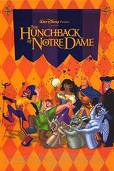
Was a whopping 17.5 hours long. *eyes cross* But I made it through. And I really liked it. The book was nothing like the movie (which I've not seen but know enough about); it was instead one of those basically-everyone-dies-at-the-end kind of books. Quite depressing, but I liked it... then again, I have morbid tastes. >_> I'm not quite sure what the moral of the story was meant to be; perhaps "Regardless of who you are and however innocent you are, you're still in danger of getting hanged." Or maybe, "Desert your friends, and you might not get hanged." Or perhaps the ever-encouraging, "If you're guilty, they'll hang you. If you're innocent, they'll probably hang you anyway." Or even the extremely uplifting, "Be a complete jerk and you might not get hanged." It's a very wholesome and inspiring book, as you can see.
M
 agyk
agykAngie Sage
I did not enjoy this book, the first installment of the Septimus Heap series. It seemed to be an immense and shameless rip-off of the Harry Potter series (the correlations between the characters, plot, and setting were ridiculously and numerous). Oh, and Harry Potter was not the only book to suffer idea plagiarism; in Magyk there was also a magic ring (conveniently found by someone lost in dark tunnel) as well as a White Witch. :| I jest not.
The book is rather slow-paced; not very exciting or memorable. There were a few redemptive qualities - funny scenes or the occasional worthy line, but all in all I found it rather cliche and dull. Perhaps because, like A Wrinkle in Time, it's meant for younger readers.
The Cricket in Times Square

George Selden
I read this one just today. Unlike Magyk, which was a whopping 13 hours long, this little tale was only about 3. I finished it easily in one work shift. It was cute, more like a short story or a fable than an actual novel, telling of a little cricket from Connecticut who accidently ends up in New York and becomes the pet of a newsboy. Not particularly exciting or fast paced tale, but it's endearing and had a nice little moral.
- - -
And because this post just wouldn't be complete without a list, here is how I rank these five books, from most favorite to least:
1. Walk Two Moons
2. The Hunchback of Notre Dame
3. The Cricket of Times Square
4. A Wrinkle in Time
5. Magyk
That's all,
-whisper
Subscribe to:
Posts (Atom)


